Barney Smit challenges Rennie’s scrum tactics after 33-26 win
John Smit says Dave Rennie’s scrum accusation diverted attention from New Zealand’s tactics during the All Blacks’ 33-26 defeat.
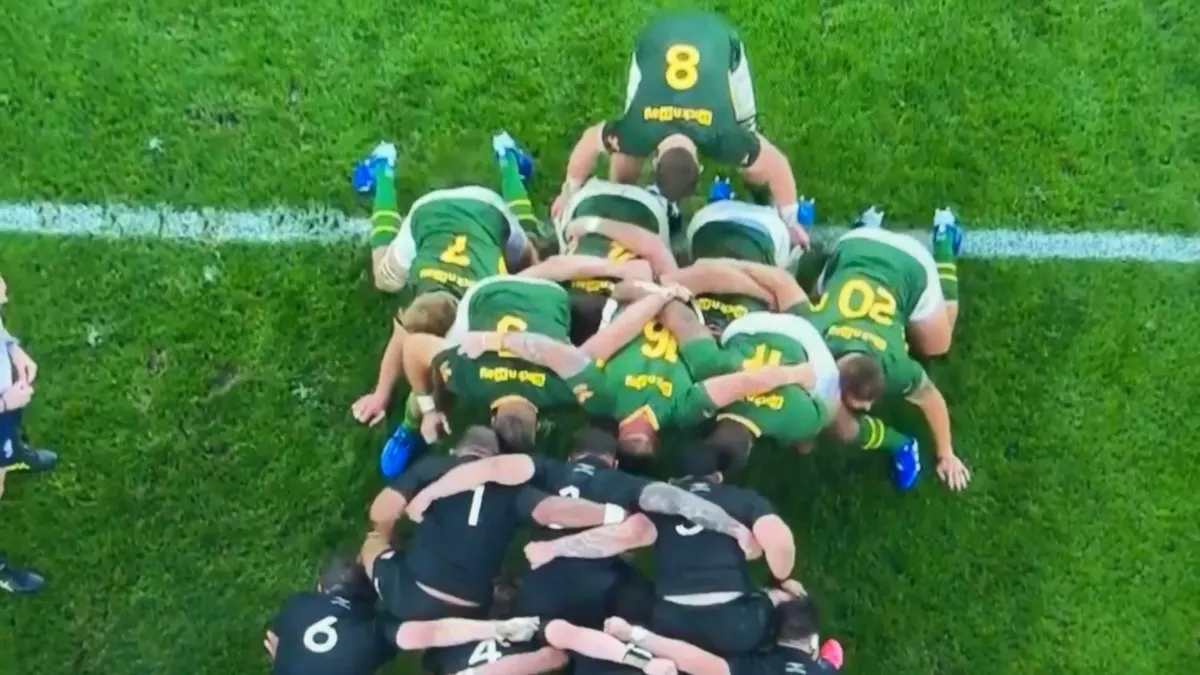
John Smit has rejected Dave Rennie’s claim that the Springboks were walking around at scrum time, describing the accusation as a calculated attempt to shift attention from New Zealand’s own approach. South Africa beat the All Blacks 33-26 in Cape Town last Saturday.
Rennie’s comments triggered a strong reaction from Springboks coach Rassie Erasmus after the second Test. Smit, a former South Africa captain who played at hooker and tighthead prop, has now entered the dispute by questioning the purpose of the allegation.
He believes the focus on South Africa’s movement distracted from the way New Zealand disrupted the scrum. The All Blacks repeatedly forced resets in Cape Town when the Springboks began to apply pressure, reducing the impact of one of South Africa’s main strengths.
Smit said South Africa still held the advantage at scrum time, but felt New Zealand had made a clear improvement from the opening Test at Ellis Park. He had viewed that first match as a dominant display by the Springboks pack, particularly through props Ox Nché and Gerhard Steenekamp.
In the second Test, New Zealand’s ability to have six scrums reset helped them avoid the full effect of South Africa’s pressure. Smit said that repeated resets can weaken the influence of an opposing scrum even when the side applying pressure remains in control.
He also said he had not seen the Springboks use the walking tactic attributed to them by Rennie. Smit acknowledged that such movement is visible and legal, but argued South Africa had not needed it and did not use it in Cape Town. In his view, the accusation helped divert scrutiny from New Zealand’s efforts to neutralise the scrum.
The rivalry now moves to Johannesburg for the third Test at FNB Stadium on Saturday. Smit said South Africa faces a New Zealand side that has improved after the opening match and gained confidence from its scrum work, leaving little margin for error in the next meeting.
Source: SA Rugby magazine