Ex-All Black Israel Dagg backs Erasmus’ ‘thug life’ rugby approach
Former New Zealand fullback Israel Dagg says Rassie Erasmus’ media tactics are adding theatre and interest to the Rugby’s Greatest Rivalry series.
Former All Blacks fullback Israel Dagg has praised Rassie Erasmus’ increasingly confrontational media approach, saying the Springbok coach is bringing valuable theatre to rugby. Dagg’s view followed Erasmus’ decision to involve former Test referee Jaco Peyper in a discussion about match tempo before Saturday’s opening Test at Ellis Park.
The episode came after New Zealand had suggested that South African sides, including the Springboks, intentionally slow matches to counter the All Blacks’ faster style. Erasmus rejected that claim, pointing to five South African matches this year in which his team had received no feedback for delaying play.
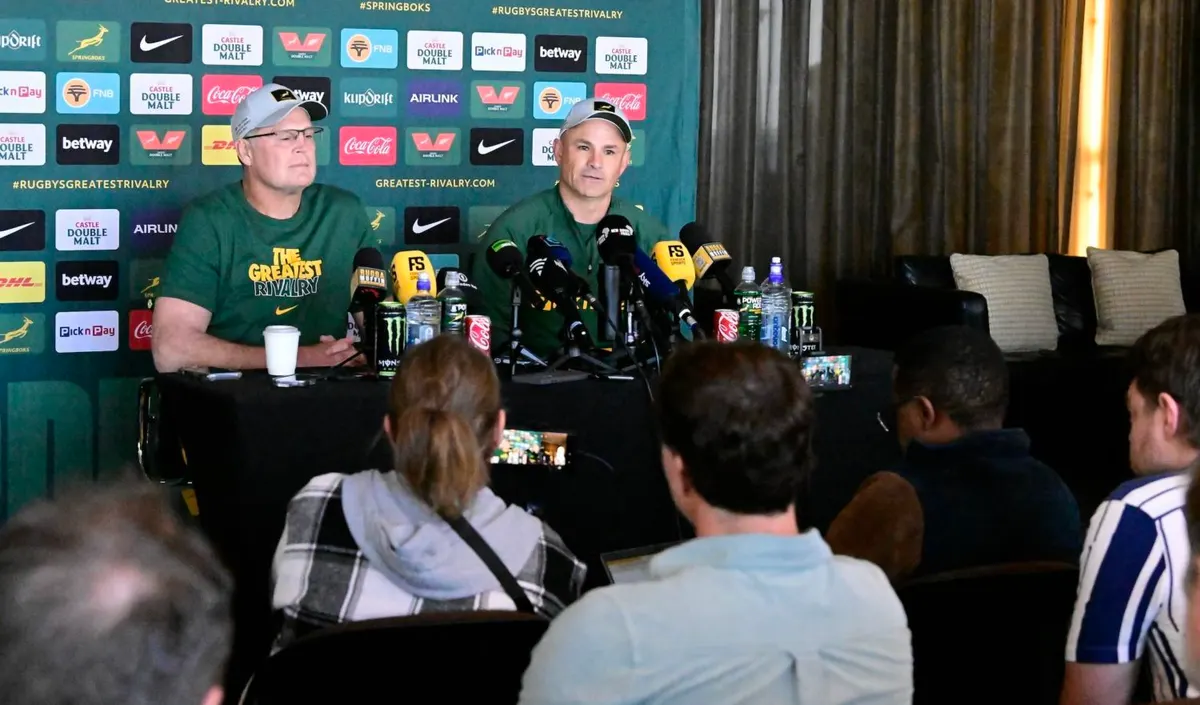
At his Monday press conference, Erasmus brought Peyper, now a Bok technical adviser, into the conversation. Peyper explained the time available to teams after a referee awards a scrum or lineout and before play restarts, offering a technical response to the debate over stoppages.
Dagg, speaking on Sport Nation’s Scotty and Izzy show, said Erasmus’ press conferences had gradually changed his opinion of the coach. He described the decision to bring Peyper into the briefing as a bold example of Erasmus understanding the question likely to come from the media and shaping the exchange around it. Dagg said that, despite the controversy surrounding some of Erasmus’ methods, he was becoming more drawn to the Springbok coach’s style.
Co-host Scotty Stevenson disagreed with that assessment. He accepted Peyper’s role within the South African coaching structure but argued that the referee’s explanation addressed a different issue from the one being raised by New Zealand. Stevenson’s point concerned how play is slowed during live match action, rather than the formal time allowed after set-piece decisions.
Stevenson viewed Erasmus’ use of Peyper as a deliberate diversion that shifted attention away from the central criticism. Dagg, however, believes the exchange is good for rugby, making the build-up to the Rugby’s Greatest Rivalry series as notable for its media contest as for the Test at Ellis Park.
Source: SA Rugby magazine