Plumtree backs Hooker to blunt All Blacks in Rugby's Greatest Rivalry
Former Sharks coach John Plumtree expects Ethan Hooker’s power and versatility to strengthen South Africa against New Zealand in Cape Town.
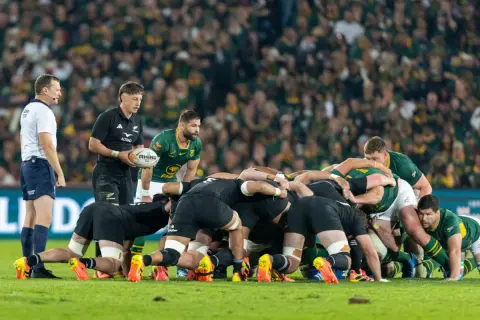
South Africa’s 33-16 defeat by New Zealand in the opening Test has increased the importance of Saturday’s second meeting in Cape Town. Another loss would give the All Blacks a 2-0 advantage in the four-Test Rugby’s Greatest Rivalry series, while the Springboks are seeking a response.
Former Sharks coach John Plumtree believes Ethan Hooker can help provide it. The 23-year-old has been chosen on the left wing at Cape Town Stadium, where he will make his sixth start in the No 11 jersey from 11 Test appearances.
Plumtree, who coached Hooker at the Sharks, sees the back as a useful option because he can also operate at outside centre. He expects Hooker’s strength and speed to improve South Africa’s defence in the wider channels, an area where New Zealand regularly works to create openings.
Hooker’s ability to contest possession after the tackle could also be important. Plumtree considers his counter-rucking a way to disrupt the All Blacks’ wide attacks and delay their ball when they move towards the edges of the field.
Cheslin Kolbe will return on the right wing after recovering from the knock that forced him to leave the first Test at Ellis Park. His inclusion was confirmed in a late team change on Friday, with Hooker retained on the opposite flank.
Rain is forecast to have a 55% chance in Cape Town, but Plumtree does not expect wet conditions to alter New Zealand’s approach. He expects the visitors to continue passing before using the kick when space appears, while adjusting the timing and accuracy of those kicks if necessary.
Plumtree also believes South Africa must improve its execution after failing to convert sustained pressure in the opener. He expects attack coach Tony Brown to have addressed passes that went behind players, particularly from the forwards, and says the Springboks may need to finish more of their chances rather than depend mainly on territory and a maul try.
Source: SA Rugby magazine