Ghana Division One League and Women’s Premier League get GFA support
The GFA will fund key officiating costs and provide cash, equipment and fuel support to Division One League and Women’s Premier League clubs.
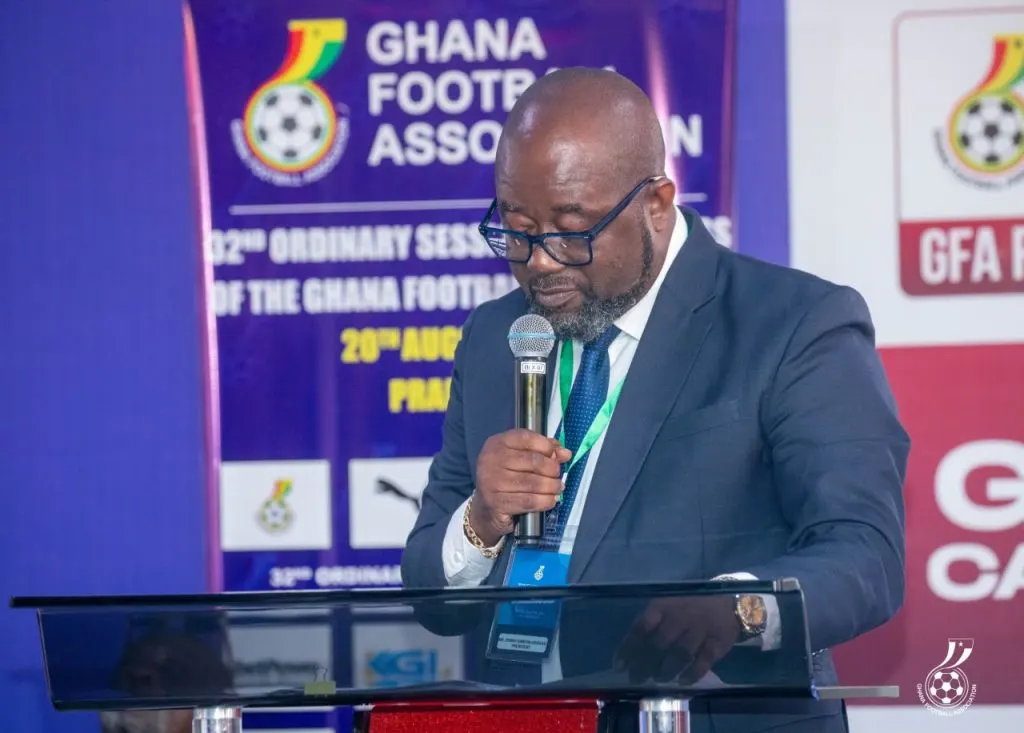
The Ghana Football Association has announced a financial and logistical support package for clubs in the Division One League and the Women’s Premier League ahead of the new domestic season. The measures were outlined by GFA President Kurt Edwin Simeon-Okraku at the Association’s 32nd Ordinary Congress at the Ghanaman Soccer Centre of Excellence in Prampram. They combine direct payments to clubs with equipment, fuel assistance and the continued payment of key matchday costs.
In the Division One League, the GFA will continue to absorb the fees of referees and Match Commissioners throughout the season. Each of the 48 participating clubs will also receive GHS 120,000. The Association will provide a further 30 footballs to every club, giving teams equipment for training and match preparation. The full DOL intervention is valued at approximately GHS 16,244,151.25.
The package is designed to reduce some of the costs associated with operating in Ghana’s second tier. Clubs still have to manage expenses linked to matchday operations, player welfare, transportation and other logistical requirements, but the removal of officiating fees provides support across the season rather than through a single payment. The cash grant gives each club a direct contribution, while the footballs address a basic sporting requirement shared by all 48 teams.
The Women’s Premier League will receive a separate package covering all 20 participating clubs. The GFA will again pay the fees of referees and Match Commissioners. Each WPL club will be given GHS 100,000 and 30 pairs of football boots. The boots provide playing equipment for squad members, while the cash support is intended to help clubs meet the operational demands of the competition.
Fuel support from Melcom and Goil will also form part of the assistance for Women’s Premier League clubs. That element is particularly linked to the practical demands of running teams through a season, including the movement of players and officials. The WPL package therefore covers officiating, direct funding, playing equipment and fuel support, although no overall value was given for the equipment, fuel or officiating components.
The structure of the two packages reflects the different forms of support being provided across the competitions. DOL clubs receive footballs, while WPL clubs receive boots. Both leagues benefit from the GFA’s payment of referees’ and Match Commissioners’ fees, and both receive direct financial assistance. The DOL allocation is spread across a larger field of 48 clubs, while the WPL support is directed to 20 teams and includes fuel assistance from the two commercial partners.
Simeon-Okraku also praised clubs for investing their own resources in improving home venues and facilities. He said he was encouraged by upgrades to dressing rooms, spectator amenities, security infrastructure, sanitation facilities, media areas and other matchday requirements. Those areas affect the conditions experienced by players, officials, supporters, journalists and commercial partners when matches are staged.
The GFA President described the improvements as contributing to football environments that are “safer, more professional, and more welcoming”. The venue work places responsibility on clubs alongside the Association’s financial and logistical intervention. Support payments and equipment can ease immediate operating pressures, while improvements to facilities address the matchday standards of the competitions.
The announcement comes as Ghana prepares for another season of domestic football in the Division One League and Women’s Premier League. For the DOL, the GFA has set out a package worth about GHS 16.24 million, including the club grants, footballs and absorbed officiating costs. For the WPL, every club has a defined cash and equipment allocation, with fuel support added to the GFA-funded officiating costs. Together, the measures provide the competitions with assistance before the season begins while clubs continue their own work on venues and facilities.
Source: Graphic Online · Sports
 Arsenal
 Coventry
 Real Betis
 Real Sociedad
 Marseille
 Strasbourg
 Sharks
 Lions
Lions National Bank of Egypt
 Zamalek SC
 Al Ittihad