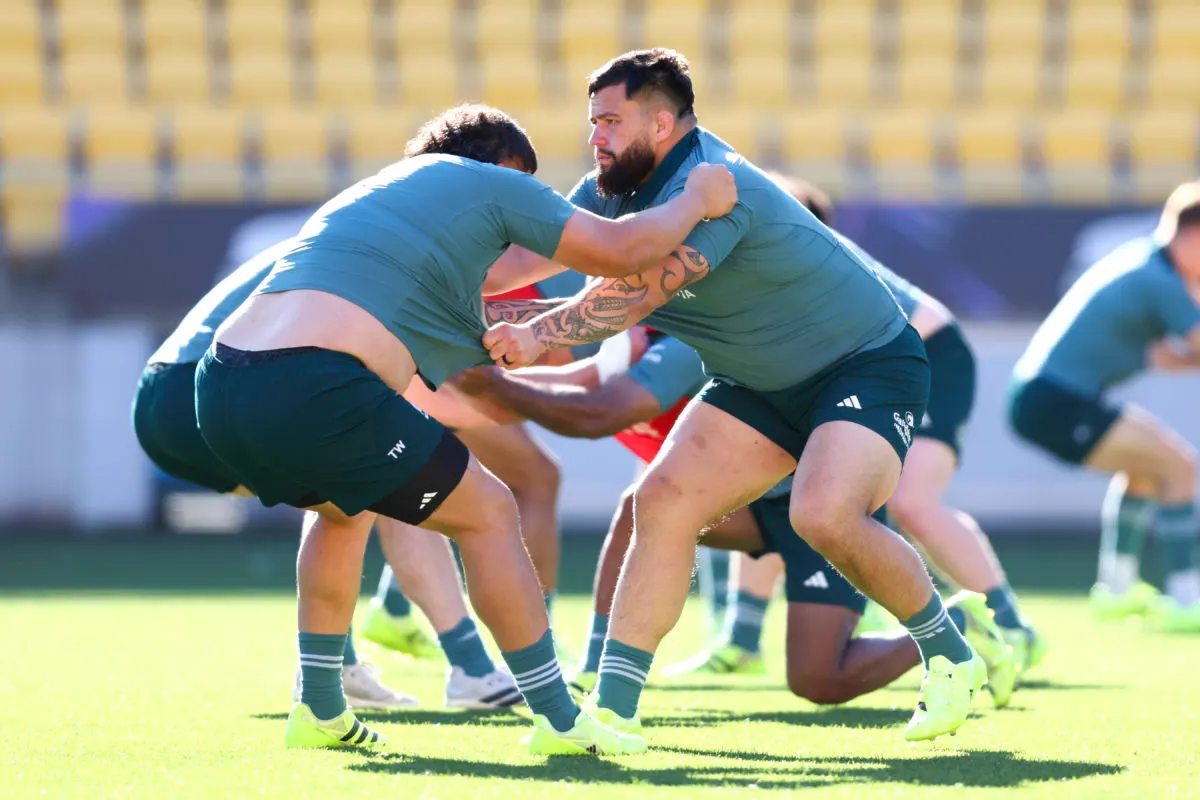
Tyrel Lomax seen as All Blacks answer to Springboks scrum power
Tyrel Lomax’s return gives New Zealand renewed confidence before Saturday’s Rugby’s Greatest Rivalry opener against South Africa at Ellis Park.
New Zealand could rely on 30-year-old Tyrel Lomax to counter South Africa’s scrum strength when the All Blacks open the Rugby’s Greatest Rivalry series at Ellis Park on Saturday. The Australia-born prop has returned after an injury-disrupted 18 months and is being viewed as a possible answer to the Springboks’ set-piece threat.
Lomax played 60 minutes against the Vodacom Bulls last week, his first appearance since recovering from that lengthy spell on the sidelines. His performance has strengthened the belief that New Zealand have the front-row resources required for the opening Test in Johannesburg.
Gregor Paul believes Lomax will carry an important responsibility against a South African side expected to make power and territory central to its approach. The Springboks are likely to apply pressure through scrums, mauls, kicking and sustained control of field position.
Lomax’s rise was accelerated during New Zealand’s South African tour in 2022, when an injury created an opportunity for him to establish himself. Since then, he has developed into a key tighthead option for the All Blacks, although injuries have interrupted his progress.
Paul considers Lomax capable of standing up to the strongest scrummaging challenge South Africa can offer. He has also placed the prop among the leading tightheads in world rugby, arguing that Lomax’s best performances combine stability with the ability to disrupt opposing packs.
The Springboks have repeatedly tried to gain an advantage against Lomax at scrum time without producing the return they wanted. That history gives New Zealand reason to believe they can resist South Africa’s preferred battle, even as the hosts seek to turn the first of four Tests into a contest dominated by set-piece pressure.
Source: SA Rugby magazine