Ghana sports: NSA launches committee to reshape national financing
Ghana’s NSA has inaugurated a five-member committee to secure sustainable funding, improve facilities and create clearer pathways from grassroots talent to elite sport.
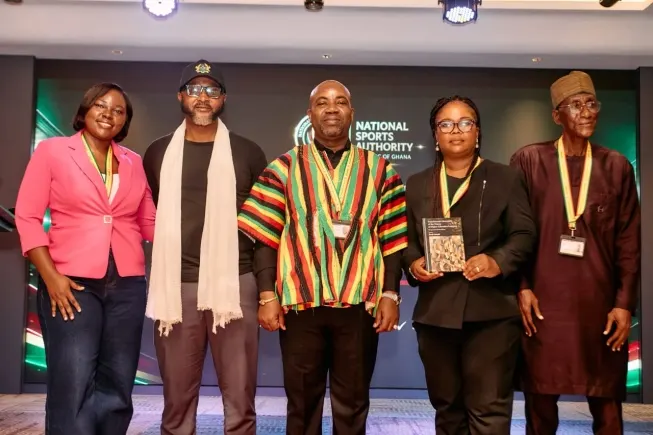
The National Sports Authority has inaugurated a five-member Resource Mobilisation and Partnership Committee to change how Ghanaian sport is financed and developed. The committee was inaugurated on Friday, August 14, 2026, at the ESP Hotel in Accra under the theme “Supporting the Reset Ghana Sports Agenda”. Its central task is to secure sustainable funding and strategic partnerships for all 58 sports federations and associations.
The committee is chaired by African Paralympic Committee President Samson Deen, with Yaw Ampofo Ankrah as co-chairman. Hajia Zenabu Sulemana, Alhaji Mutawakilu Iddrisu and Mavis Ekua Enyamah Kwainoe, who is also the secretary, complete the five-member structure. The group has been asked to identify equipment and logistical needs across the sports system and develop credible local and international partnerships rather than depend mainly on short-term financial appeals.
Deen said the committee’s role must be broader than finding money whenever a federation or national team faces an immediate need. “Resource mobilisation must not mean simply asking for money,” he said. He argued that Ghana has substantial sporting talent but lacks the systems needed to identify athletes, finance their development, prepare them properly and promote them to the highest level. “Ghana does not lack sporting talent. What we must build is the system that finds the talent, finances the talent, develops the talent, projects the talent — and takes that talent to the podium,” he said.
That approach would represent a shift from emergency fundraising to planned investment. The committee will examine the needs of federations, equipment shortages and logistical gaps while also reviewing the condition and use of ungrassed pitches, commonly known as Sakora parks. Improving playing surfaces and facilities is part of the wider attempt to make participation and training more consistent beyond Ghana’s established sporting centres.
A major opportunity identified by the committee is the proposed Constituency Games. The initiative is intended to provide a community-owned national talent discovery platform, with athletes moving from constituency and community competitions to regional and national events before entering elite development programmes. Deen said the games should not be treated as another item on the sporting calendar. “The Constituency Games must not become just another competition on the calendar. They must become a national talent-discovery movement,” he said.
The committee will also advance a proposed $30 million National Sports Revival and Podium Investment Programme. The programme is designed to cover infrastructure, athlete preparation, coaching, sports science, anti-doping programmes and grassroots development. Its scope places athlete performance alongside the facilities, technical support and integrity systems required to sustain progress. The committee’s stated test will therefore be whether these areas receive practical support, not whether additional plans are produced.
Ghana’s recent results show the performance environment in which such investment would operate. The national side’s latest five-match sequence is two defeats, two draws and one victory: a 1-0 loss away to Colombia, a 2-1 loss away to Croatia, a goalless draw away to England, a 1-0 win over Panama and a 1-1 draw away to Wales. The results include a clean sheet against England and a narrow win over Panama, but also consecutive defeats before those matches. They underline the difference between having talented players and building the consistent preparation and support systems the committee says Ghana needs across sport.
The proposed funding model also places attention on the period before athletes become established names. Deen urged the media to follow emerging competitors rather than concentrate only on medal winners. “We do not want the media to arrive only when the medal has been won. We want you there when the journey begins,” he said. That emphasis matches the proposed pathway through the Constituency Games, where early identification would be linked to regional, national and elite programmes instead of ending with a single local competition.
The committee’s work will be judged by the resources and opportunities delivered to athletes and sporting communities. Deen said it should be assessed “not by the number of meetings we hold, but by the partnerships we build; not by the documents we produce, but by the resources we unlock”. The immediate next steps are to map the needs of the 58 federations and associations, explore partnerships, review Sakora parks and move forward with the Constituency Games and the $30 million investment programme. Together, those measures set out the NSA’s intended route from fragmented support to a longer-term national sports system.
Source: Graphic Online · Sports
 Edson Barboza
 Esteban Ribovics
 Dustin Stoltzfus
 Gillian Robertson
 Islam Makhachev
 Ian Machado Garry